
Install dig on Ubuntu, Debian or Kali Linux

install dig
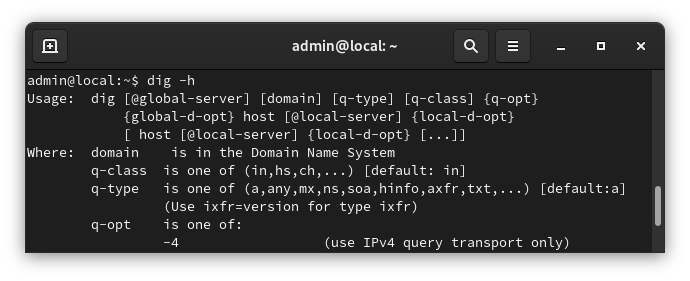
Help options for dig


Dig is a DNS lookup utility.  It is included in most Linux distributions by default, but if it isn’t you can easily install dig with the following command.

The dig utility is apart of the dnsutils package

sudo apt-get install dnsutils -y

After it is installed, we can verify that it is working with

dig -v

For more information on how to use dig, refer to the following link.

https://www.howtogeek.com/663056/how-to-use-the-dig-command-on-linux/

The following is copied and pasted from the dig man page.

NAME
       dig - DNS lookup utility

SYNOPSIS
       dig [@server] [-b address] [-c class] [-f filename] [-k filename] [-m] [-p port#] [-q name]
           [-t type] [-v] [-x addr] [-y [hmac:]name:key] [[-4] | [-6]] [name] [type] [class]
           [queryopt...]

       dig [-h]

       dig [global-queryopt...] [query...]

DESCRIPTION
       dig is a flexible tool for interrogating DNS name servers. It performs DNS lookups and
       displays the answers that are returned from the name server(s) that were queried. Most DNS
       administrators use dig to troubleshoot DNS problems because of its flexibility, ease of use
       and clarity of output. Other lookup tools tend to have less functionality than dig.

       Although dig is normally used with command-line arguments, it also has a batch mode of
       operation for reading lookup requests from a file. A brief summary of its command-line
       arguments and options is printed when the -h option is given. Unlike earlier versions, the
       BIND 9 implementation of dig allows multiple lookups to be issued from the command line.

       Unless it is told to query a specific name server, dig will try each of the servers listed
       in /etc/resolv.conf. If no usable server addresses are found, dig will send the query to the
       local host.

       When no command line arguments or options are given, dig will perform an NS query for "."
       (the root).

       It is possible to set per-user defaults for dig via ${HOME}/.digrc. This file is read and
       any options in it are applied before the command line arguments. The -r option disables this
       feature, for scripts that need predictable behaviour.

       The IN and CH class names overlap with the IN and CH top level domain names. Either use the
       -t and -c options to specify the type and class, use the -q the specify the domain name, or
       use "IN." and "CH." when looking up these top level domains.

SIMPLE USAGE
       A typical invocation of dig looks like:

            dig @server name type

       where:

       server
           is the name or IP address of the name server to query. This can be an IPv4 address in
           dotted-decimal notation or an IPv6 address in colon-delimited notation. When the
           supplied server argument is a hostname, dig resolves that name before querying that name
           server.

           If no server argument is provided, dig consults /etc/resolv.conf; if an address is found
           there, it queries the name server at that address. If either of the -4 or -6 options are
           in use, then only addresses for the corresponding transport will be tried. If no usable
           addresses are found, dig will send the query to the local host. The reply from the name
           server that responds is displayed.

       name
           is the name of the resource record that is to be looked up.

       type
           indicates what type of query is required — ANY, A, MX, SIG, etc.  type can be any valid
           query type. If no type argument is supplied, dig will perform a lookup for an A record.


Add multiple IP bindings to Mikrotik Hotspot – Bash Script

Copy and paste the following into a file named mtbypass.sh and then “chmod +x mtbypass.sh”  Or download from this direct link.  Be sure to change the username and password

#!bin/bash
filelist="bypasslist.txt"
username="admin"
password="password!"
ip="$1"

for i in `cat ${filelist}`
do
address=`echo $i | cut -d= -f1`
mac=`echo $i | cut -d= -f2`
sshpass -p ${password} ssh ${username}@${ip} "ip hotspot ip-binding add address=${address} mac-address=${mac} type=bypassed"
done

Now create a file named bypasslist.txt and put all the addresses you want bypassed.  You’ll need the Mac Address and the IP Address.

Example file

192.168.88.2=4C:5E:0C:B8:4E:01
192.168.88.3=3E:AA:A1:2D:8B:2C
192.168.88.5=DE:D1:39:65:91:4E

Usage of script is

./mtbypass.sh MikrotikIP

Example:

./mtbypass.sh 192.168.88.1

Modifying DNS Entry for Domain

Search /etc/named.conf to find the zone file for the domain.

Find the domain name and see where the zone file is.  Example zone block.

zone "incredigeek.com" in {
 type master;
 file "/var/named/mzones/incredigeek.com.hosts";
 allow-query { any; };
 forwarders {};
};

The file is /var/named/mzones/incredigeek.com.hosts

Edit your zone file by opening it up in a text editor.

Example.  Text in bold added for comments.

$TTL 21600
$ORIGIN com.
incredigeek IN SOA dns1.dns-server.com. dns2.dns-server.com.(
 0000147 ; serial  <- This needs to be incremented so it is greater than the previous version of this file
 43200 ; refresh (12 hours)
 7200 ; retry (2 hours)
 604800 ; expire (7 days)
 21600 ) ; minimum
 NS dns1.dns-server.com.
 NS dns2.dns-server.com.
 300 A 10.0.0.11   <- A record for root domain
$ORIGIN incredigeek.com.
localhost IN A 127.0.0.1
www 300 IN A 10.0.0.11  <- www subdomain A record
login 300 IN A 10.0.0.12 <- another subdomain A record

Save file and reload Bind

On FreeBSD

rndc reload incredigeek.com

you can reload everything with

rndc reload

On Fedora/CentOS/REHL

service named reload

On Ubuntu/Debian

service bind9 restart

You may need to reload Bind on any slave servers

How to install Broadcom WiFi drivers in Fedora 27

Install RPM Fusion

sudo dnf install https://download1.rpmfusion.org/free/fedora/rpmfusion-free-release-$(rpm -E %fedora).noarch.rpm https://download1.rpmfusion.org/nonfree/fedora/rpmfusion-nonfree-release-$(rpm -E %fedora).noarch.rpm

Install packages

sudo dnf install -y kernel-devel-$(uname -r)
sudo dnf install -y akmodssudo dnf install -y broadcom-wl

Give the computer a reboot and the Broadcom card should now work.

Install Hashcat Utils

Hashcat - Kali Linux

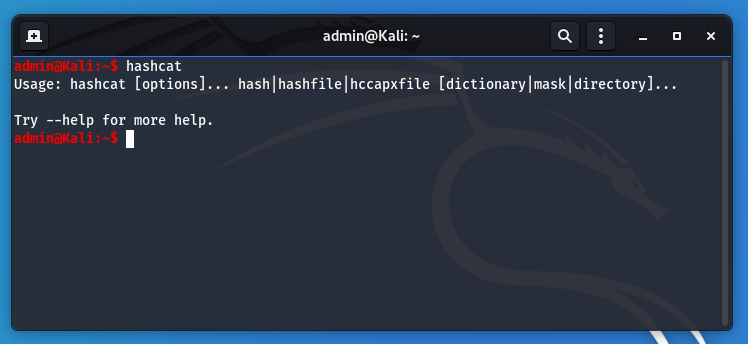
Hashcat on Kali Linux

Here is a quick way to download and install the Hashcat utils.

Download the Hashcat utils

wget https://github.com/hashcat/hashcat-utils/archive/master.zip

Run the following commands to unzip and make the binaries

unzip master.zip
cd hashcat-utils-master/src
make

You can now convert an aircrack file by invoking the cap2hccapx binary

./cap2hccapx.bin /path/to/aircrack.cap /path/for/output

Check out the following article for more details on converting Aircrack files to Hashcat hccapx

Need to install Hashcat on Fedora?

How to convert an Aircrack capture file to a Hashcat hccapx

Using Aircrack

aircrack-ng input.cap -J hashcat_output

Unfortunately the above command doesn’t seem to work anymore.

If you try to run Hashcat with the outputted file you’ll get an error.

hashcat_output.hccap: Old hccap format detected! You need to update: https://hashcat.net/q/hccapx

Using Hashcat utils

Refer to this guide for installing the Hashcat utils.

Basic syntax is

./cap2hccapx.bin input.cap output.hccapx

Example

~/Downloads/hashcat-utils-master/src/cap2hccapx.bin aircrack-01.cap aircrack.hccapx